 John
JohnWhy Compare Now
Here’s a steady truth: warehouses that adapt faster win more days than they lose. Today’s autonomous forklift doesn’t just move pallets; it reshapes flow and timing for everyone around it. Picture a morning rush, three dock doors backed up, and one picker out sick—now imagine a forklift mobile robot keeping lanes open, even during shift change. Data keeps nudging us: empty travel often eats 20–30% of forklift time, near-misses spike in cramped aisles, and battery swaps still steal minutes we can’t spare. So the question is simple and kind: if you compare your options with clear eyes, what changes first—safety, cycle time, or morale?
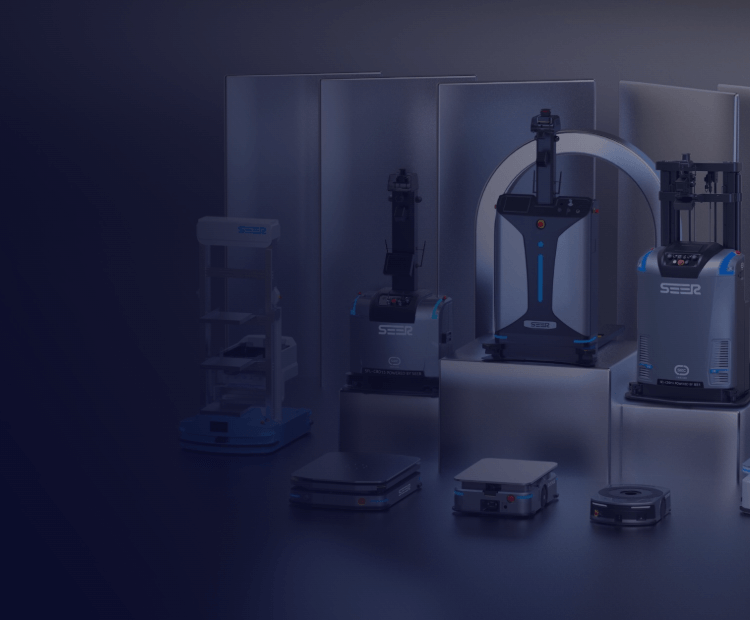
Let’s walk through this with care. We’ll compare what old methods promise versus what modern stacks deliver (no jargon storms, pinky promise). And we’ll boil it down to a few signals you can actually track in the field. On we go.
Hidden Friction the Brochures Skip
What gets in the way?
Under the glossy demos, everyday friction hides in plain sight. Label glare throws off pallet detection. Reconfigured racks break brittle routes. SLAM drift creeps in when aisles get mirrored by shrink wrap—funny how that works, right? And integration with your WMS can stall if mission states aren’t mapped cleanly. The result is stop‑and‑go behavior that burns time and trust. A capable forklift mobile robot should buffer these shocks: resilient perception beyond 2D LiDAR alone, semantic maps that survive layout tweaks, and fleet orchestration that rebalances tasks when a bay goes down. Look, it’s simpler than you think when the system is built for change.
There’s more. Safety should not trigger productivity whiplash. If your safety PLC trips too often from false positives, crews start to work around the robot (not with it). Battery anxiety is real when power converters and BMS logic aren’t tuned to your shift rhythm. Edge computing nodes must be sized for sensor fusion peaks, not sunny-day loads. And when support tickets pile up, you learn fast which vendor actually pushes OTA fixes and which asks for logs you can’t export. These aren’t complaints; they’re quiet signals from the floor that tell you where the time goes—and how to get it back.
Real-world Impact: Principles That Change the Curve
What’s Next
Forward-looking platforms share a few working principles. First, perception is layered: 3D LiDAR plus camera fusion, with redundancy for dust, glare, and occlusion. Second, the map becomes “living.” Think semantic mapping that tags docks, aisles, and keep‑out zones, so re-slotting a lane doesn’t nuke your routes. Third, planning turns adaptive. Model predictive control and priority queues let the robot yield gracefully, not ping‑pong. Fleet orchestration then allocates missions by real-time constraints—battery state, lift capacity, aisle congestion—rather than a fixed queue. When you compare vendors, ask how these pieces survive a bad day, not just a good demo. If a forklift mobile robot can hold its line through dust, detours, and overtime, you can trust it on Monday mornings.

The rest is lifecycle. OTA updates should land weekly without floor disruption. Digital twins help you test a new cross-dock flow before moving a single rack. Energy is managed as a portfolio—smart charging windows, healthy depth-of-discharge, and clean switchover through robust power converters. Even V2X hooks matter as your facility grows: doors, scales, conveyors, and AMRs should coordinate without drama—yes, even during peak season. In short, the next wave compares best when we judge resilience, not just speed. The strongest systems make the messy parts of work a little calmer—and that’s the point.
To choose well, use three grounded metrics: 1) dock‑to‑dock time variance (p95) under real congestion; 2) safety stop quality, measured by false‑positive rate per operating hour and recovery time; 3) sustained mission success across a full shift, including MTBF and hot-swap integration with your WMS/MES. Track these for two weeks, side by side—advice you can keep, not hype. For a deeper technical read or to compare architectures in context, see SEER Robotics.

 admin
admin Baniza
 SEO
SEO